IndustryRide-HailingServicesMobile Apps · Dashboards

A ride-hailing platform for Mexico — rider app, driver app, one backend.

iTaxi MX matches riders and drivers in real time, settles every fare, and gives operations one panel to run the market from. Live on iOS and Android.

Core Offering
Ride-Hailing Platform
Duration
Multi-Phase Build
Platforms
iOS + Android + Web
Launch Year
2023
Project Results
3
Products on one backend
Passenger App · Driver App · Admin Panel
Structural fact — products shipped
2
Apps Live on Both Stores
iOS App Store · Google Play
Verified — App Store + Google Play
4.6★
App Store rating
Live passenger rating
Verified — App Store
2
Payment gateways
Stripe · Intercash
Structural fact — gateways integrated
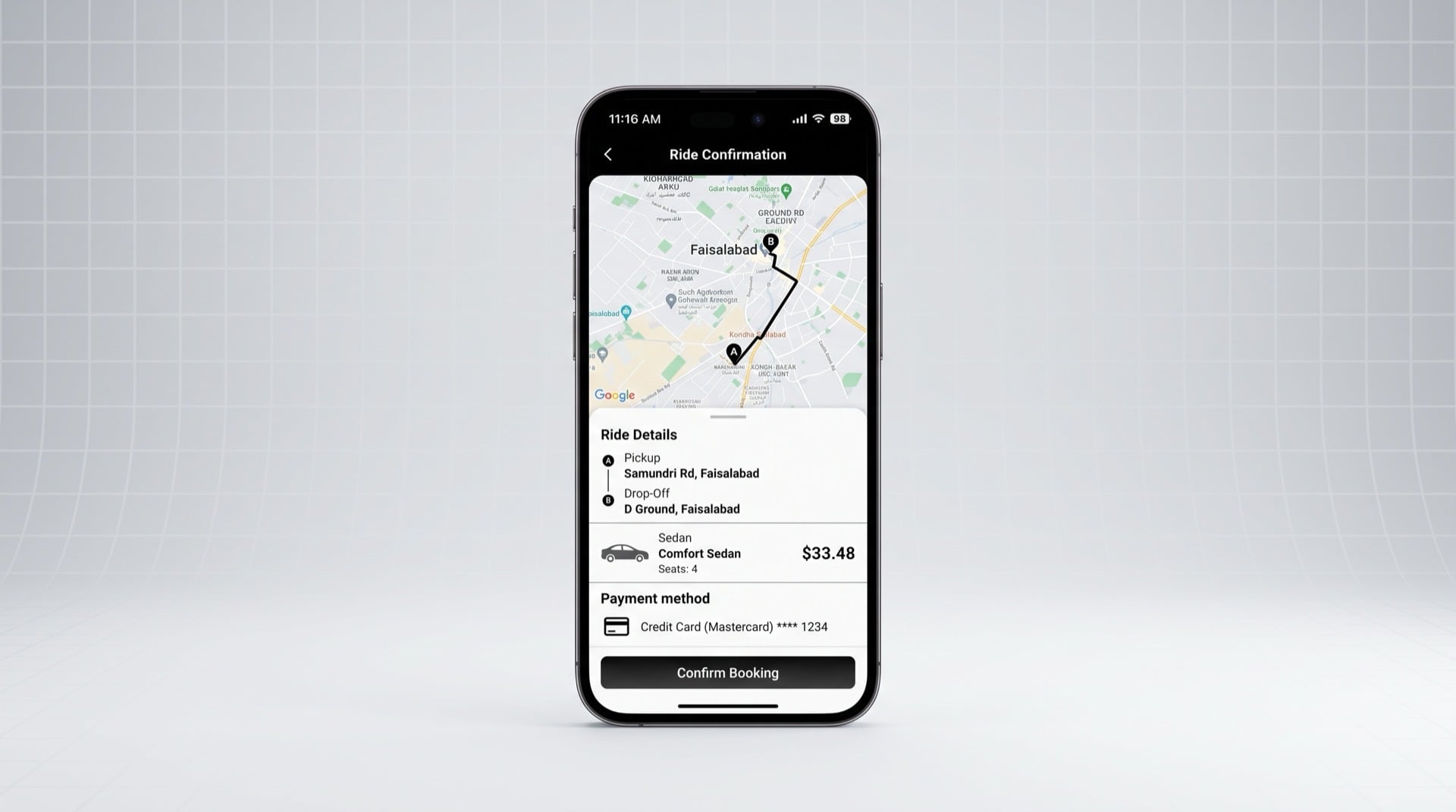
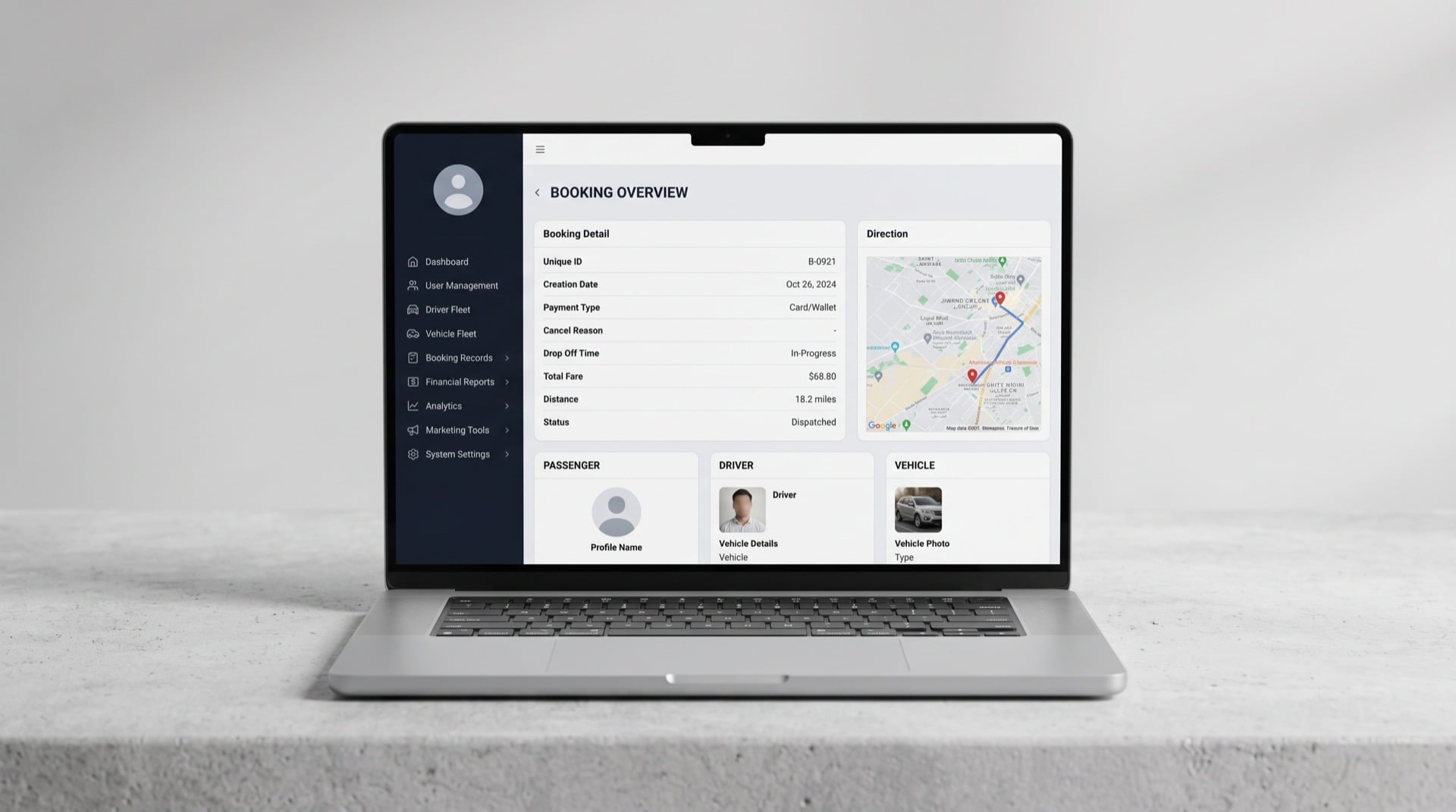
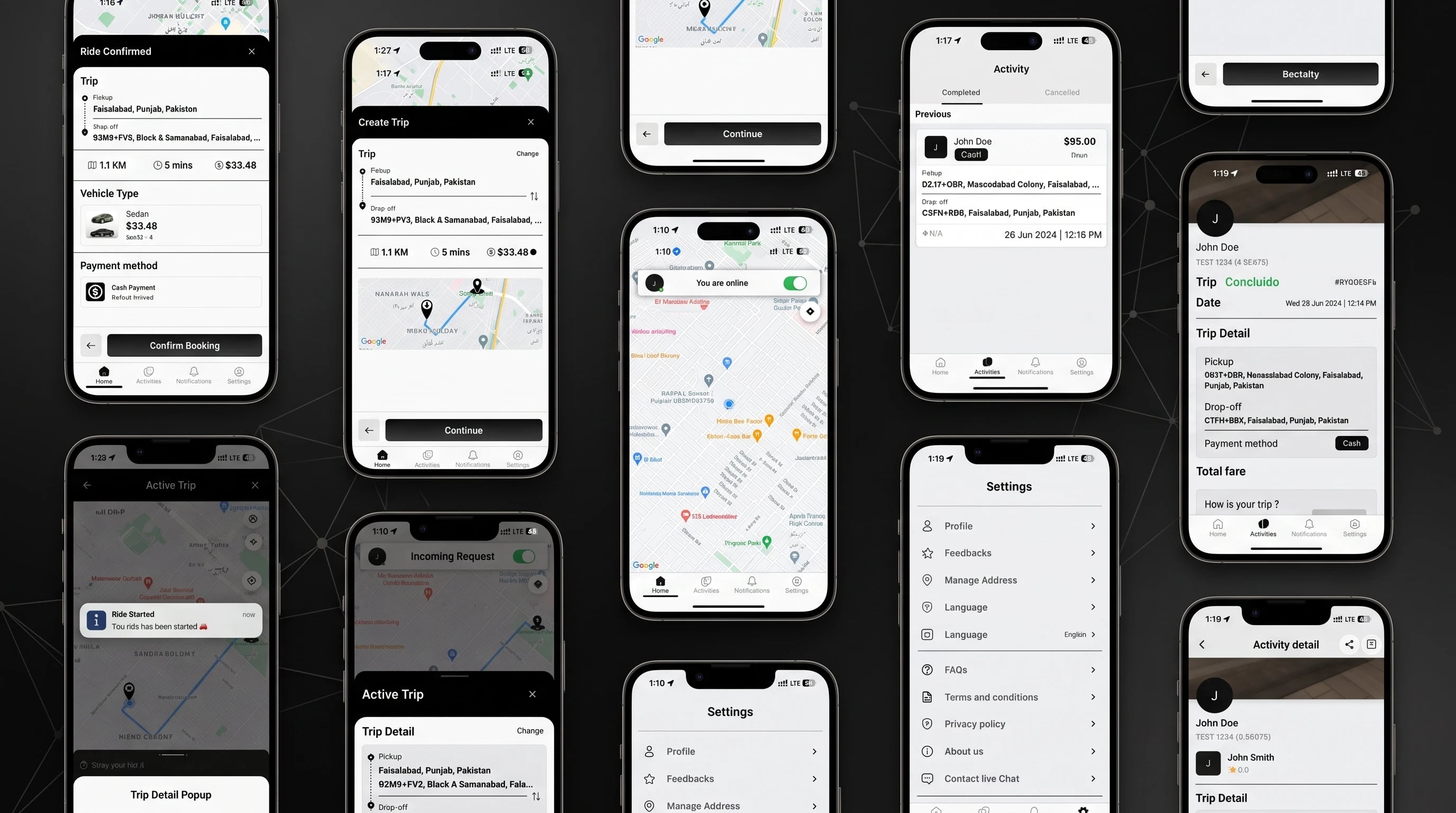
iTaxi MX ride-hailing platform showing passenger booking, driver navigation, and admin dashboard screens
The Context

A ride-hailing platform built for Mexico specifically.

iTaxi MX ships three products on one backend: a passenger app with real-time tracking and predictable pricing, a driver app with navigation and earnings visibility, and an admin panel for fraud, disputes and operations — multi-language, multi-gateway, and reliable on variable connectivity.

Existing platforms lacked integrated admin oversight — fraud went unchecked, disputes had no resolution path, and operations couldn't scale. The client needed a platform built for Mexico's specific market: multi-language, multi-gateway payments, real-time reliability in variable connectivity, and full operational control from day one.

iTaxi MX passenger app — booking, live tracking and fare screens
The Challenge

Ride-hailing in Mexico was fragmented, unreliable, and unsafe.

Passengers faced inconsistent taxi availability, unpredictable pricing, and no real-time tracking — street hails meant safety risks and cash-only disputes with no recourse. Finding a reliable ride in Mexico's busy urban markets was a daily friction point.

Drivers had no tools to manage ride requests efficiently, no visibility into their own earnings, and no navigation integration. Every shift was manual, disconnected, and prone to payment disputes.

Our Approach

Scope before code.

We started where every NLS build starts: scope before code. Three separate products — passenger app, driver app, admin panel — mapped against one shared backend, with the architecture decisions that kept a real-time ride-hailing platform shippable across a phased engagement:

One codebase, both stores.

Flutter for iOS and Android — one team, one timeline, no feature drift between the passenger and driver apps across platforms.

Real-time from the ground up.

Socket.io for live driver tracking, ride status updates, and in-app chat — because in ride-hailing, a two-second delay is a cancelled ride.

Mexico-native payments.

Stripe and Intercash integrated with an in-app wallet — because Mexico's market needs both card and cash-alternative flows, not a single-gateway assumption.

Admin control built for operations.

Full oversight of bookings, users, drivers, payouts, and disputes from one panel — so the client can run daily operations without touching the codebase.

Weekly demos kept the client watching the product grow — ride matching one week, driver earnings and admin analytics the next.

The Impact

What this means in practice.

01

iTaxi MX is live on the App Store and Google Play — serving passengers and drivers across Mexico with real-time ride-hailing.

02

Passengers book, track, and pay in one app — a process that previously required street hails, cash negotiations, and zero accountability.

03

Real-time Socket.io tracking means passengers see their driver move on the map live — the core trust signal that converts first-time users into repeat riders.

04

Drivers manage their entire shift from one app: incoming requests, navigation, earnings, and payouts — no manual coordination needed.

05

The in-app wallet and multi-gateway payments eliminated cash disputes — the single biggest friction point in Mexico's taxi market.

06

The admin panel gives the client full operational control: driver approvals, booking oversight, payment reconciliation, and dispute resolution — no developer needed for daily operations.

07

One Flutter codebase means every future feature ships to iOS and Android simultaneously — passenger and driver apps stay in sync.

08

The platform is rated 4.6★ on the App Store — a live signal that the core ride experience works.

Got a build that has to hold under real-world load?

Built for Every Platform

Three products, one platform.

3 separate products. One shared backend. One team. One timeline.

iOS + Android

Passenger App

01
  • Ride booking with real-time driver tracking
  • Secure in-app payments & wallet
  • Fare estimates before booking
  • Ride history, ratings & reviews
  • In-app support & dispute reporting
  • Push notifications for ride status
  • Social login & multi-language support
Passenger App — iOS + Android
iOS + Android

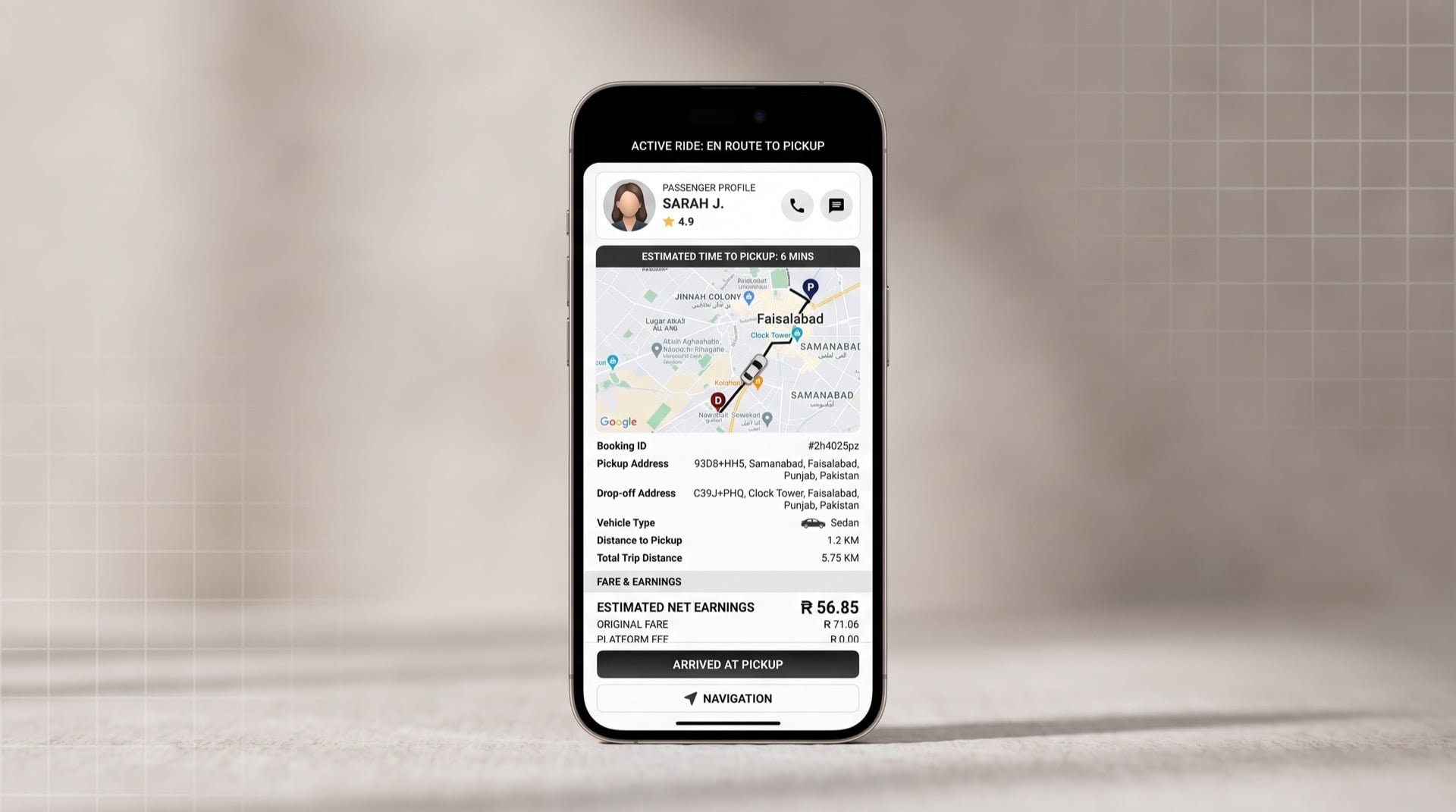
Driver App

02
  • Incoming ride request management
  • Turn-by-turn navigation integration
  • Real-time earnings & payout tracking
  • Live status updates via sockets
  • In-app chat with passengers
  • Profile management & document uploads
  • Helpdesk & support access
Driver App — iOS + Android
Web

Admin Panel

03
  • Full oversight: bookings, users & drivers
  • Payment reconciliation & reporting
  • Driver verification & account control
  • Dispute resolution & moderation
  • Push notifications & announcements
  • Analytics & performance dashboards
  • Cloud storage for media & documents
Admin Panel — Web
FAQ

Questions We Get Asked

Have a similar project? Talk to us

A production ride-hailing MVP — passenger app, driver app, live tracking, payments, and admin — typically starts around $30K with our team. Full multi-city platforms with wallets, analytics, and dispatch control run higher. You'll get an exact figure after a free consultation; we scope from a platform we've already shipped, not from guesses.

A focused MVP launches in a few months. A complete ecosystem like iTaxi MX — three products, real-time architecture, market-specific payments — is a phased build over a longer engagement, with working software demoed every Friday. Anyone promising a full Uber-grade platform in a few weeks is describing a template, not a product.

Both work; they win in different markets. Uber's algorithmic fixed fare dominates the US and Europe, while bidding models lead in much of Latin America, Africa, and South Asia. The choice shapes your matching logic and backend architecture, so we decide it in scoping — before a line of code. Having shipped in the Latin American market, we'll tell you honestly what fits yours.

No. iTaxi MX is a custom-built platform — one Flutter codebase, Node.js backend, socket-based real-time layer — owned entirely by the client. Clone scripts are cheaper on day one and expensive forever after: you can't change what you don't own.

Building a ride-hailing or on-demand transport platform?

We've already solved real-time tracking, multi-gateway payments, driver management, and admin operations.
See exactly how we'd scope yours.

Book a Free Consultation
Trusted US-Registered Development Agency
5.0 Client Satisfaction on Clutch
Recognized Top Rated Plus on Upwork
250+ Products Delivered
15+ Expert Developers & Designers
6+ Years of Development Excellence
Serving Clients Across the Globe
88% Client Retention Rate
Trusted US-Registered Development Agency
5.0 Client Satisfaction on Clutch
Recognized Top Rated Plus on Upwork
250+ Products Delivered
15+ Expert Developers & Designers
6+ Years of Development Excellence
Serving Clients Across the Globe
88% Client Retention Rate
Logo